1. Get Comfortable in the Water
- Practice Floating: Before even thinking about catching waves, practice getting comfortable on your board. Lie flat, keeping your body centered, and practice balancing while paddling and floating.
- Practice Duck Diving or Turtle Rolling: Learn how to get past the breaking waves. For a smaller board, practice duck diving by pushing the nose under the wave and diving beneath it. For larger boards, use the turtle roll technique, flipping the board over and holding it as the wave passes.
2. Master Paddling
- Proper Paddle Strokes: Paddle with your arms extended straight in front of you, pulling water in a smooth motion down your side. Alternate sides regularly to keep balanced.
- Body Position: Keep your chest raised and your head up while paddling, making sure your body is in the middle of the board. Too far forward can cause the board to tip, too far back, and it may slow you down.
- Stay Relaxed: Avoid overexerting yourself. Smooth, steady strokes will conserve energy and allow you to paddle out more effectively.
3. Timing the Wave
- Watch for the Right Wave: Look for waves that are ideal for your skill level. Small, consistent waves are best for beginners.
- Get in Position: Paddle toward the wave as it starts to approach. You should be positioned so you can catch the wave early, just as it begins to break.
- Feel the Wave: As the wave starts to lift your board, begin paddling more aggressively to gain enough speed to catch the wave.
4. Learn the Pop-Up
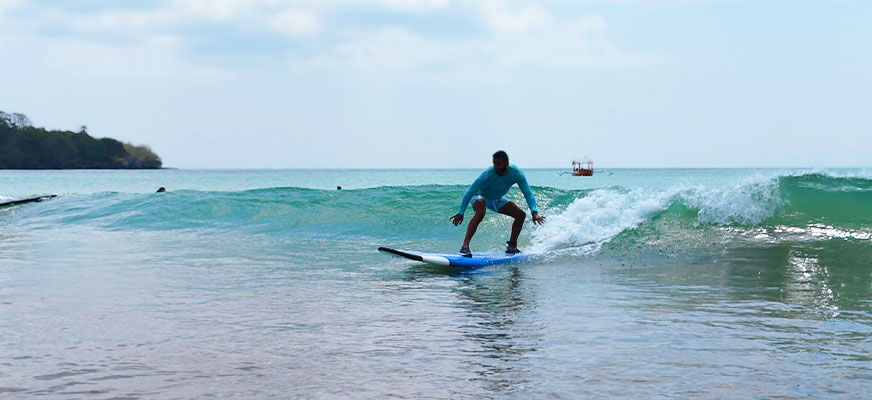
- Start Slow: On flat ground, practice your pop-up. Begin by pushing up with your hands, bringing your knees underneath you, then quickly thrusting your feet into the standing position. Focus on smooth, controlled movements.
- Pop-Up on the Wave: When the wave lifts you, push up on your hands and, in one swift motion, bring your feet underneath you. The goal is to stand up quickly, but without hesitation, so the wave doesn’t pass you by.
- Foot Placement: Position your feet shoulder-width apart, keeping your knees slightly bent for balance. Keep your arms out for stability.
5. Focus on Balance and Body Position
- Stay Low: Keeping a low center of gravity is essential for stability. Bend your knees slightly and avoid locking them. A wide stance will help keep your balance.
- Eyes Forward: Look at where you want to go, not at your feet. Keeping your gaze forward helps with balance and direction.
- Body Alignment: Keep your shoulders, hips, and knees aligned, facing the direction of the wave. This will give you the ability to turn and maneuver.
6. Turning the Board
- Weight Shifting: To turn the board, shift your weight slightly to the side you want to turn toward. For a regular rider, turn by shifting your weight to the right to go left, or left to go right.
- Engage the Rail: Gently lean into the board’s edge, pressing down on the side of the board to carve. The deeper the rail engagement, the sharper the turn.
- Stay Fluid: Keep your movements smooth. Overreacting or jerking will throw off your balance. Practice small, gentle turns before attempting more dramatic maneuvers.
7. Practice Riding the Wave
- Stay Centered: Keep your body centered over the board to avoid nosediving or flipping off. Focus on keeping your momentum as you ride the wave.
- Ride the Face: As you gain experience, aim to ride along the face of the wave (the unbroken section) instead of just riding straight down the middle. This gives you more control and stability.
- Control Speed: Adjust your body position to control your speed on the wave. If you want to slow down, shift your weight slightly back. If you need more speed, lean forward.
8. Practice Consistently
- Time in the Water: The more time you spend surfing, the more your technique will improve. Don’t rush the process—perfecting your surf skills takes patience and practice.
- Evaluate Your Progress: After each session, reflect on what worked and what didn’t. Keep track of what you need to focus on for your next practice.
9. Stay Safe and Respect the Ocean
- Know the Local Rules: Every surf spot has its own set of rules and etiquette. Respect others, wait your turn, and don’t drop in on someone else’s wave.
- Know Your Limits: Don’t push yourself too hard in challenging conditions. Start in smaller waves and progress as you build confidence.
- Wear Safety Gear: When learning, consider wearing a leash (to keep your board attached to you) and a helmet for extra protection.
By following these steps and practicing regularly, you’ll steadily improve your technique and enjoy the rewarding experience of riding waves with confidence.
Leave a Reply